
Who operates the Historic Ephrata Cloister? Who is the PHMC? Who are the
Ephrata Cloister Associates?
The
Commonwealth
of Pennsylvania
purchased the Ephrata Cloister from the
German Seventh
Day Baptist
Church
in 1941. When the Commonwealth acquired the
surviving elements of the historic site they
began an extensive program of restoration and
interpretation. Today, the Pennsylvania
Historical and Museum Commission (PHMC) is the
administering agency of the Ephrata Cloister for
the Commonwealth
of Pennsylvania.
The Ephrata Cloister
Associates, incorporated in 1958, as a
non-profit organization composed of interested
persons who are dedicated to the promotion of
the Ephrata Cloister through the sponsorship of
special Cloister related events such as the
Lantern Tours, Apple Dumpling Day and Day of
Music, Christmas at the Cloister, the Ephrata
Cloister Chorus, the Student Historian program,
and other educational programs for special
audiences. The Associates also maintain the
Museum Store, which specializes in Cloister
related books, gifts, and hand-crafted items.
Volunteers of the
Ephrata Cloister Associates also operate the
site two days a week with volunteer guides and
provide vital support for educational programs,
group tours, and school programs.
Today,
the PHMC and the Ephrata Cloister Associates
work together as partners to
preserve and interpret for citizens and visitors, this 18th
century religious community as a meaningful
example of religious toleration and intellectual
freedom in the
New World and of
the significant role
Pennsylvania
played in the human rights issue of freedom of
religion and expression.
What cuts were made in the
Pennsylvania
Historical and Museum Commission (PHMC) due to
last year's budget crisis?
Last year, the PHMC’s
portion of the Keystone Fund was entirely
diverted from the PHMC into the government’s
general fund. In the past, the PHMC had received
Keystone funding annually from 1994 through
2008. This funding was intended to be used for
maintenance and preservation projects at the
historic sites and museums. This fund was
critical because it replaced things like failed
roofs, rotten joists and siding, and was also
used to paint buildings and fund mechanical
system upgrades. The loss of the Keystone funds
meant that some maintenance, exhibit and
planning projects were discontinued and that
many scheduled maintenance projects were
delayed.
The loss of the Keystone
Funds coupled with the cut of nearly $6 million
in PHMC’s General Government Operations
appropriation, also resulted in 108 PHMC
employees receiving furlough notices last year,
the closing of 11 historic sites and reductions
at the remaining sites administered by the PHMC.
Effectively, these cuts not
only meant the loss of funding for maintenance
and preservation but also the loss of nearly
1,000 years of staff experience and the
dismantling of the premiere statewide public
history organization in the
United States.
How was Ephrata specifically affected by the budget cuts?
While the Ephrata Cloister
was not one of the eleven sites that were
closed, we were still affected greatly. Three
employees received furlough notices at the
Ephrata Cloister which resulted in the loss of
the ability to execute as many public programs
as we did in the past. This also meant the site
now needed to be staffed two days a week by the
Ephrata Cloister Associates. Funding to our site
was also reduced and some maintenance projects
deferred until funds become available again. In
the past, costs such as maintaining the Cloister
grounds, buildings and accessibility were
covered by the state budget—but this may no
longer be the case as the state budget continues
to tighten.
What is projected for this upcoming budget?
Should the Keystone Funds
be again diverted to the General Fund in fiscal
year 2010-2011, the result could be another 35
to 45 furloughs and the possible closure of the
remaining sites including the Ephrata Cloister.
This could also mean that the Ephrata Cloister
would need even more support from the Ephrata
Cloister Associates to keep the site running the
way it has in the past.
What expenses are the Ephrata Cloister Associates expected to cover this
year?
The Ephrata Cloister
Associates have been asked to take a larger role
in the operations of the Ephrata Cloister. Their
role in helping to preserve, maintain, and
interpret the Ephrata Cloister is critical.
They have
already been asked this year to help preserve
and protect both the history of the Ephrata
Cloister and the safety of our visitors. That is
why this year’s annual appeal is so important.
What are the immediate concerns for Ephrata?
Again, if the Keystone
Funds are not restored the Ephrata Cloister
could lose additional staff. If additional staff
is lost, the Ephrata Cloister would need more
support from the Ephrata Cloister Associates
through additional funding and volunteers to be
able to open its doors for guided tours, public
programs, special events, and school tours. Our
other concern is that maintenance projects at
the site could greatly suffer. We are counting
on your donation now more than ever to help us
stay open, safe and beautiful.
Why should I choose to support the Ephrata Cloister when so many other
organizations are asking for my donation?
Last year over 21,000
people and 1,400 schoolchildren visited the
Ephrata Cloister. People from all over the world
come to visit us and these visitors stay in
local hotels, patronize local businesses, and
support our local economy. The Ephrata Cloister
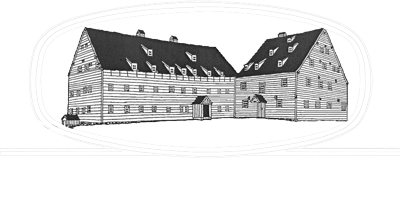
is one of the most significant examples of
architecture in the nation, and today, nine
original buildings are part of a 28-acre complex
that is open for visitors to enjoy. The Ephrata
Cloister is more than a museum! Educational
programs, special community events, weddings,
family pictures, have all occurred on our
grounds.
The Ephrata Cloister is
also one of only 313 museums to be accredited by
the American Association of Museums three times.
That honor only goes to a small percentage of
museums. The accreditation process ensures that
museums like the Ephrata Cloister meet the
highest of professional standards. Therefore,
accredited museums are reviewed every fifteen
years. The
Ephrata Cloister was originally
accredited in 1984 and then subsequently in 1996
and 2008.
As an accredited museum, the Ephrata
Cloister joins a list of some of the nation’s
most prestigious institutions including Colonial
Williamsburg, the Smithsonian’s National Air and
Space Museum,
The White House,
Winterthur Museum
and Gardens, and the Philadelphia Museum of Art.
How can I help?
Take
Action: You can write a letter to your local
representative.
Click here for a link to
a sample letter.
Support:
You can support this year’s Annual Appeal.
Please click here for a link to our
appeal letter or click below to make a
secure online donation. Remember no gift is too
small to make a difference and all gifts are
tax-deductible.
Volunteer: There are many volunteer
opportunities at the Historic Ephrata Cloister.
Please click here to learn more about
volunteering. You can choose your activity,
dates, and times based on your interest. We are
a very welcoming, appreciative, and supportive
community of volunteers and staff. Please
consider joining the Ephrata Cloister family.
For more information or to set up a meeting at
the site to learn more please contact Andrea
Glass-Heffner, Educational Program Coordinator,
at (717) 733-6600.
Become a
Member: We have several different membership
levels. Members are invited to all Historic
Ephrata Cloister events and receive a site
newsletter, The Chronicon. Please
click here
for more information on becoming a member.